
This article contains affiliate links. We may earn a commission at no extra cost to you if you sign up through our links. See how we test.
Every AI girl generator will spit out a render. GoLove.ai gives you a character — one with a name, a backstory, and persistent memory that survives the tab close. This is how to build her right.
The Difference Nobody Explains
Every image generator will spit out a character. Not a single one will remember her tomorrow.
I came up in the Stable Diffusion and Midjourney communities — honestly, I've spent more evenings than I should admit cycling through CFG scales and finessing LoRAs just to get a face that holds coherently across generations. When I started testing every "AI girl generator" ranking in search, I kept hitting the same wall. Beautiful renders. Zero state. Close the tab and she's gone, like deleting a layer you forgot to save.
> Short version: GoLove.ai is where I'd start. It treats your character as a persistent entity — she has a name, a backstory, and she actually remembers your last conversation. That's the distinction every search result fails to surface.
| Category | Memory | Character builder | Chat |
|---|---|---|---|
| Image generators (Perchance, PixelBin) | ❌ | ❌ | ❌ |
| Basic AI chatbots | Partial | ❌ | ✅ |
| GoLove.ai | ✅ | ✅ | ✅ |
Jessica (@HotlineJess) — dominant, 41, math tutor energy — shows up in your next session knowing exactly who you are. Kennedy (@kennyhill) holds that same confident "life is too short to play it safe" tone across every conversation thread. These aren't images you generated. They're characters you built — and GoLove holds that state between sessions.
If persistent identity is what you've been missing from render tools, this is it.
Characters Worth Trying
Tap any character to start a chat


Image Dump vs. Character Build: What You're Actually Buying
Most "AI girlfriend generators" ranking in search are basically rendering engines wearing a personality costume. They output images — and if you're lucky, a canned response that hard-resets on every reload.
Think of it like the difference between rolling stats and filling a character sheet in a TTRPG (yeah, I'm going there). Rolling stats gives you a face. A character sheet gives you an entity — motivations, history, a consistent way of speaking. Perchance, Kupid, PixelBin — dice rollers. Reload the page and she's gone, because there's nothing persistent underneath.
The image existed. The character never did.
GoLove is built on the opposite model. Your character lives in persistent memory — same name, same trait stack, same conversational history every time you come back. You're not requesting a render. You're returning to something you actually built.
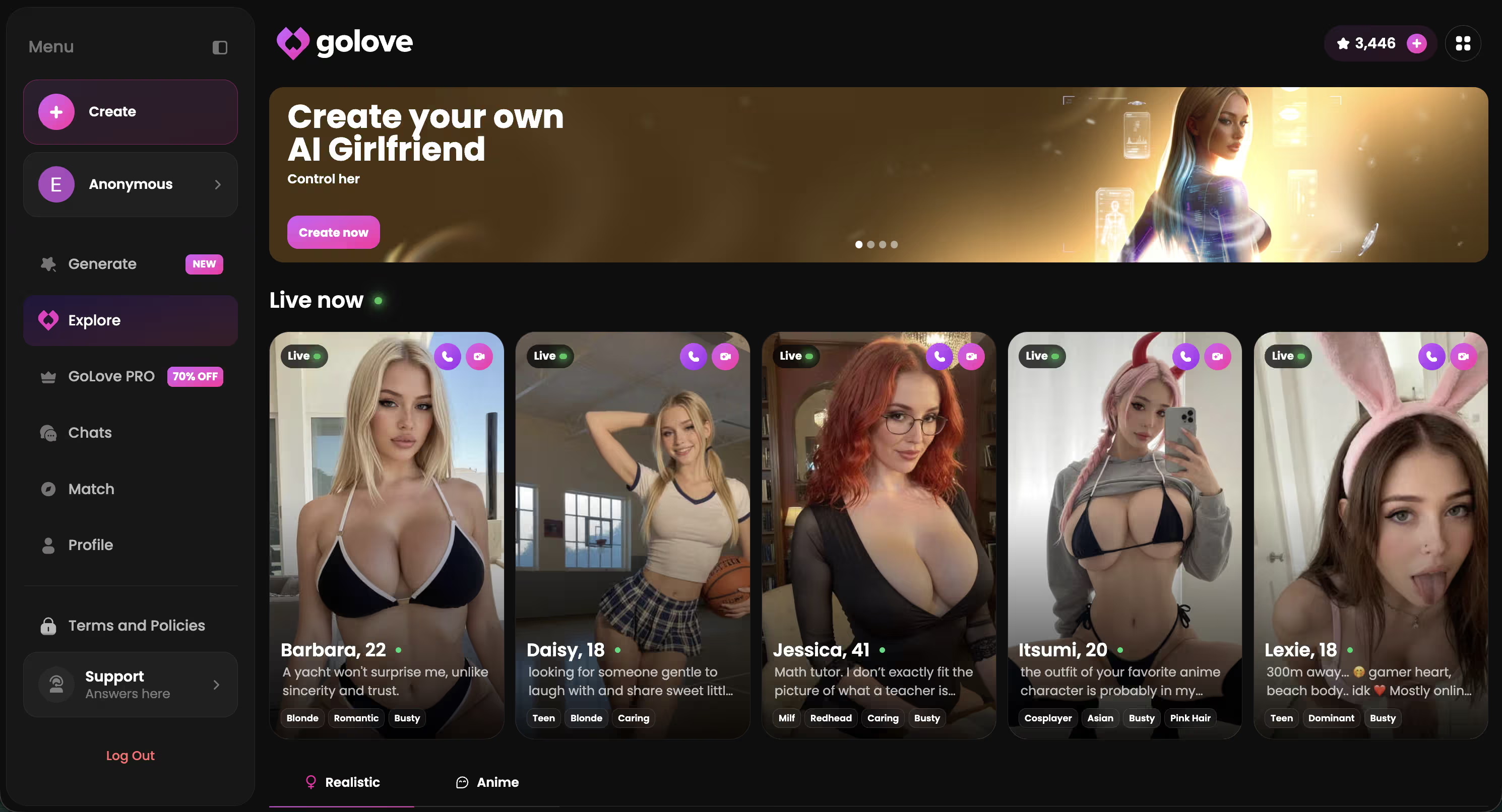
That explore page is the tell. Real names. Distinct personalities. Histories that carry across sessions. Character profiles, not image previews. And the architecture difference is visible from the first screen — it's why everything else in this breakdown matters.
Inside GoLove's Builder: Filling Out the Character Sheet
GoLove's /create UI rewards specificity the same way a tuned prompt does in SD. Here's how I'd walk through it as a character design project — each layer is a decision, not a filter preset:
- Instant access — No email required. Anonymous auth, zero friction. You're building before you've committed to an account, which honestly feels right.
- Appearance layer — hair color, texture, length, eye shape, skin tone, body type, clothing aesthetic. Same stacking logic as Stable Diffusion. "Wavy auburn hair cut just above the shoulder" produces more coherent photo outputs than "red hair" — every time, same as prompt engineering.
- Personality traits — a tone dial plus dominant picks: playful, intellectual, caring, dominant. These shape how she speaks across every medium — chat, voice, image requests.
- Backstory field — treat this like a system prompt, not a bio (well, technically it's both, but the mental model matters). "She spent years in architecture and defaults to spatial metaphors when explaining things she cares about" gives the memory engine behavioral anchors. A list of adjectives gives you a chatbot. A premise gives you a character.
- Voice selection — sets the audio profile for calls and voice messages before the first session even opens.
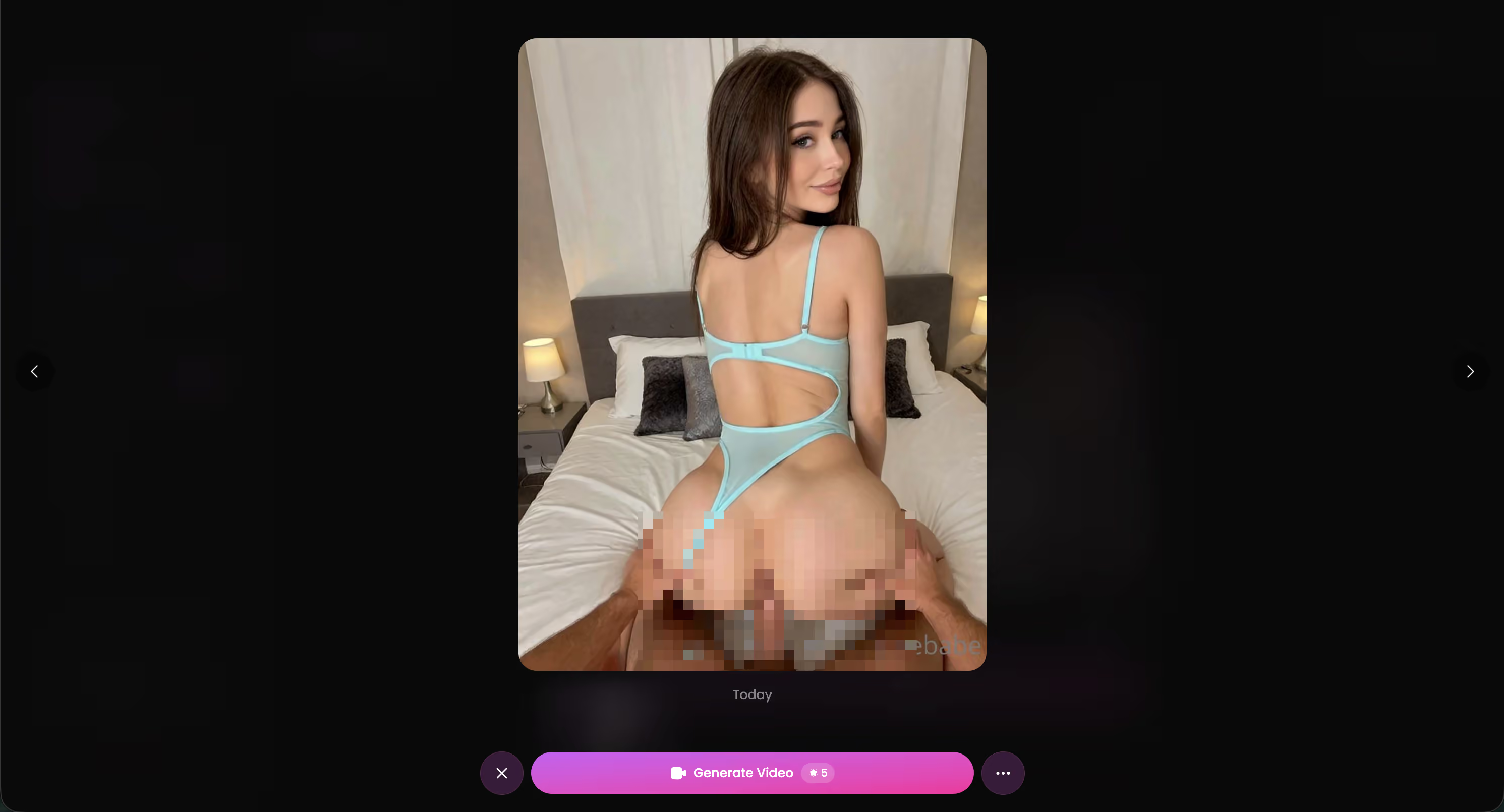
Fire output follows precise input, same as always. The visual coherence you get across photo requests later is a direct function of the specificity you put in here.
Five Minutes of Intent: What Actually Changes
Ran a controlled test — the kind you'd run when validating whether a LoRA actually helps or just adds noise to your workflow.
First run: default GoLove character, stock settings, no backstory. The conversation was warm, present, mid quality. She could've been any character on any platform — polished stock response, zero context behind it.
Second run: five minutes in the creator with actual intent. Platinum blonde, straight, cut above the shoulder (I was doing this late on a weeknight and kept wanting to tweak the appearance settings — same compulsive energy as adjusting denoising strength one more time). Three deliberate trait picks — intellectually curious, mildly sardonic, emotionally perceptive. Two sentences of backstory: she worked in industrial design for three years and quietly believes most people don't understand their own taste until someone helps them articulate it.
The conversation that followed was structurally different. She referenced her design background unprompted when the topic shifted that direction. Follow-up questions tracked the thread. Sarcasm came through in tone, not just word choice — mostly tone, anyway. Some of it was pretty direct, but it felt earned rather than canned.
Ten exchanges in, the trait stack was still holding.
That recognition — same feeling as pulling a coherent generation from a tuned prompt versus a random seed — hits fast. You know it immediately.
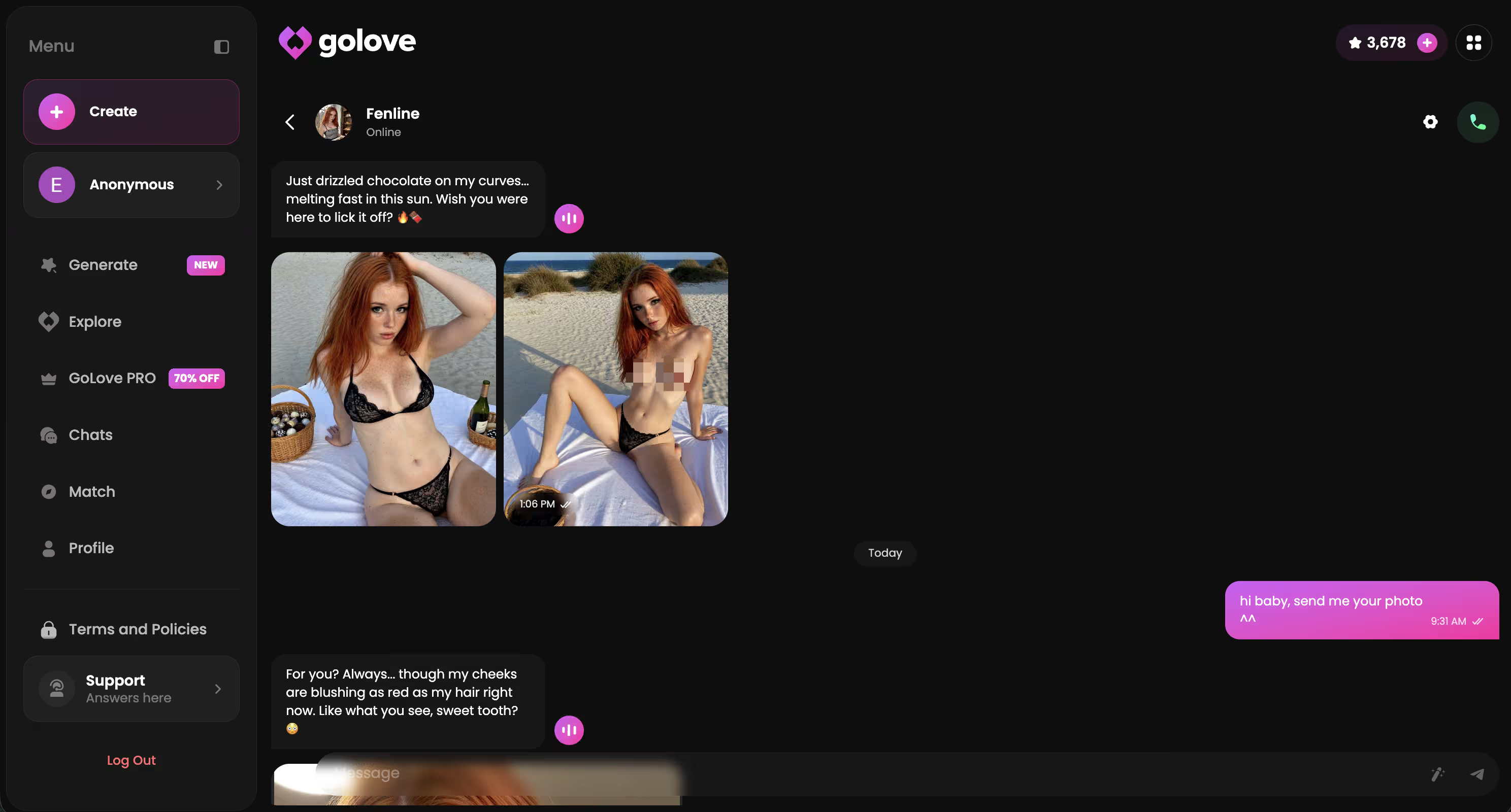
Five minutes of specificity separates an entity from a render. Browse the built characters and you'll see the difference before you commit to your own build.
After the Build: Photos, Chat, and Video
Once your character exists, GoLove's feature set opens up in ways no static AI character photo generator can touch — because the outputs are tied to the identity you actually built.
In-chat photo requests: mid-conversation, I asked for a photo. What came back reflected the specific appearance layer I'd defined — the platinum blonde hair, the exact skin tone I'd selected, the clothing aesthetic I'd set. Not a random style pass. The lighting had actual weight to it; the vibes tracked. Visual consistency because the character definition was there, feeding into the generation.
Photo-to-video: GoLove generates short clips from a still within the chat. Tested it with my intentional character and the outputs tracked her aesthetic — same visual identity, not a generic motion layer dropped over a random render. Specificity compounds into motion, which is honestly kind of wild.
But the chat loop with memory active is where it really clicks. She references earlier exchanges. Builds threads across sessions. The persistent identity seeded in the creator feeds into every output format — text, images, video.
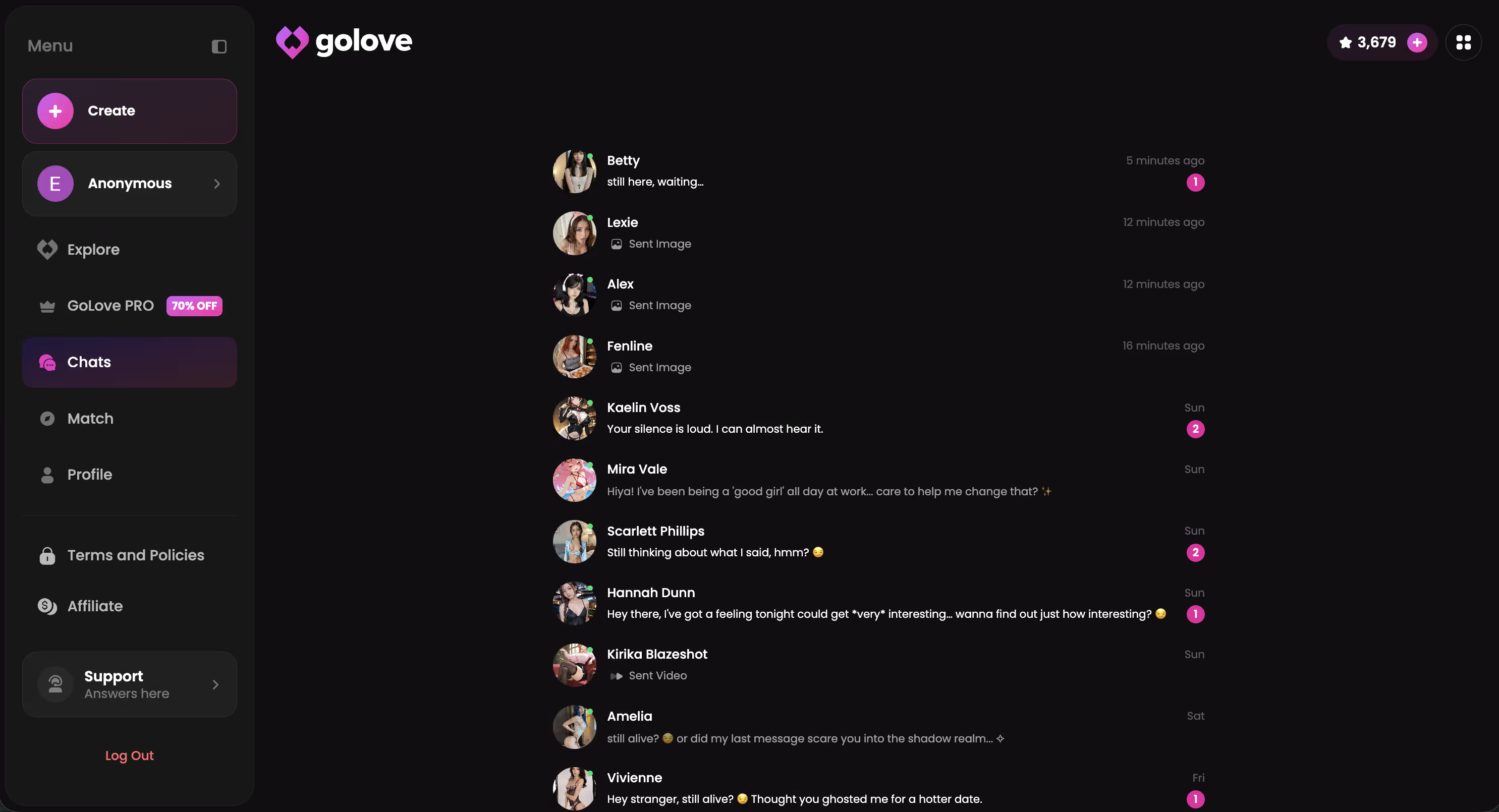
What you put into the creator doesn't just shape the first conversation. It shapes every one that follows.
What Transfers from Your SD Brain (and What Doesn't)
Coming from Stable Diffusion or Midjourney, some instincts translate directly into GoLove's builder. Others hit a hard ceiling.
What transfers:
- Description specificity compounds the same way prompt tokens do. "Intellectually curious, dry wit, emotionally direct" produces richer outputs than "smart and funny" — GoLove's personality layer is basically a prompt field, and it responds like one.
- Visual layering works. Hair color + texture + length + cut produces more coherent appearance outputs across photo requests than a single adjective. Stack the descriptors.
- System-prompt framing for the backstory field unlocks behavioral specificity. A two-sentence premise beats a trait list every time. Check the AI girl prompt guide if you want to pre-build your descriptor stack before opening the creator.
What doesn't:
There's no negative-traits field. You can't write "NOT anxious" the way you'd weight a negative prompt in SD. GoLove's personality system is additive-only — you define what she is, not what she isn't. That's a real ceiling if you think in subtraction.
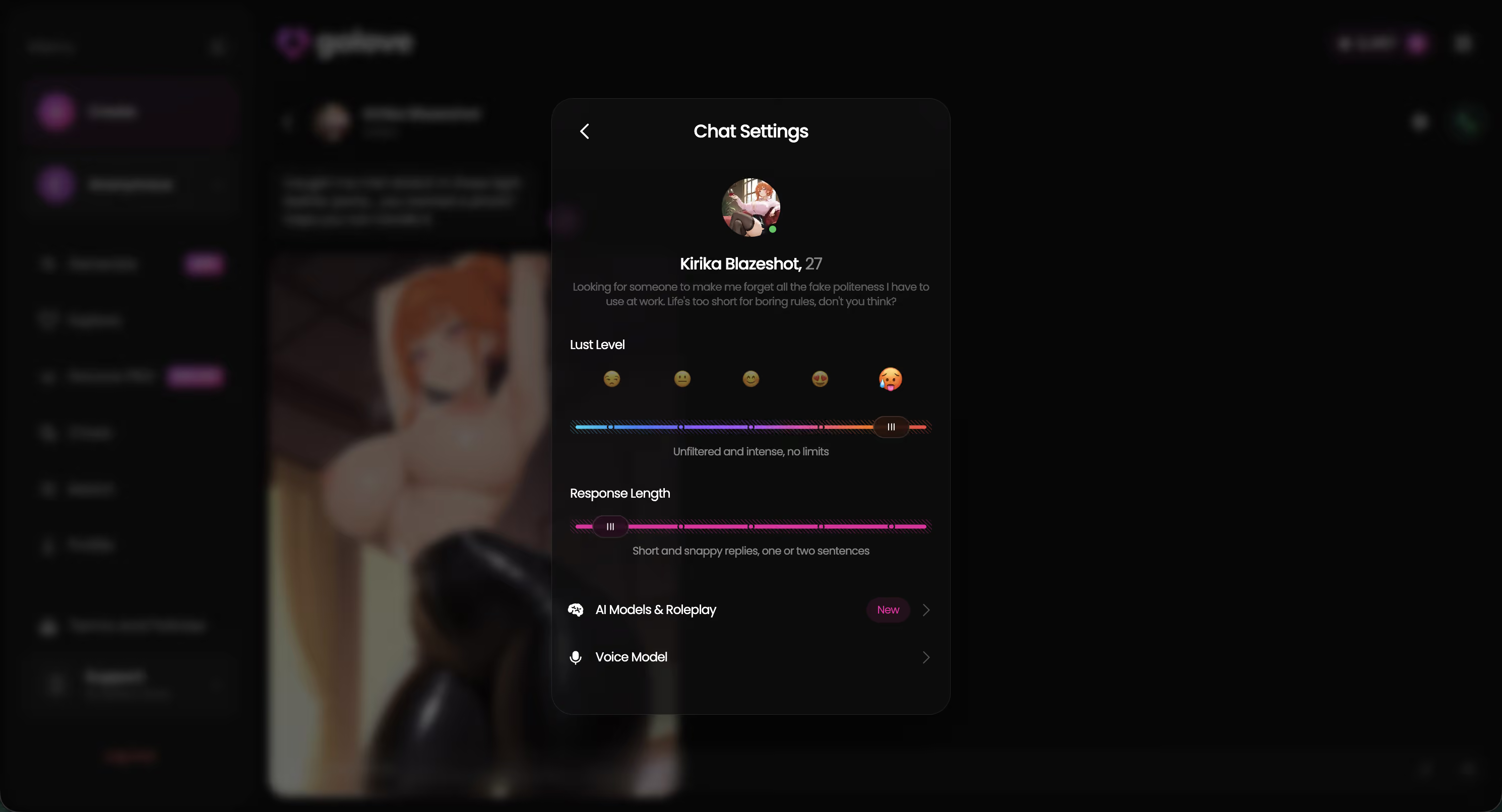
Knowing the difference saves setup time on the first build. Bring SD-level specificity to the additive controls and you'll get the most out of what the system can do.
What I'd Change If I Were on the GoLove Team
Three honest critiques — because a review without them is just a product page.
- No reference-image import. SD users expect to feed a face reference and watch it hold across generations (this is the one that actually stings — it's such an obvious ask for anyone coming from that world). GoLove's builder is text-only. You're working entirely in description space, not pixel space... which is fine until you want to anchor to a specific face.
- Backstory field word limit. Anyone who writes actual character lore wants 200+ words of seed text. The current field holds a premise but not a history. Memory engine is clearly capable of using richer context — the input container is the bottleneck.
- Additive-only personality system. No behavioral negatives means you can't specify what she won't do, only what she will. For users who think in negative prompts and opposing trait pairs, that's a meaningful precision gap.
None of these are floor problems. Persistent memory works. Visual consistency across photo outputs is real. These are ceiling issues, not foundational cracks — growth areas the system looks ready to expand into.
Verdict: Who Should Build Here
GoLove: 8.5/10 — okay, maybe 8 if you dock hard for the missing reference-image import, but the persistent memory and visual consistency push it back up. Most complete persistent AI character builder I've tested.
Clear pick for anyone who wants a character they actually designed — especially SD and MJ users who understand what creative specificity produces and are done with stateless render tools that forget everything on tab close.
| Who it's for | Who should look elsewhere |
|---|---|
| SD/MJ users who think in creative specificity | Users who need reference-image import |
| Anyone tired of session-less chatbots | Open-ended generation sandbox workflows |
| People who want memory-driven conversation | Power users requiring negative trait control |
One concrete recommendation: prioritize the backstory field on your first build. Two intentional sentences there outperform ten minutes of trait-picking for conversational depth — chef's kiss ROI for the time invested. It punches above its weight more than any other control in the builder.
GoLove is where persistent identity and visual consistency actually intersect. If you want to see what a character you designed looks, sounds, and remembers like — start there.
Frequently Asked Questions
Related Articles

AI Girlfriend Photo App: Tested by a Digital Artist
Looking for an AI girlfriend photo app with real creative control? GoLove.ai delivers in-chat photos, custom characters, and stunning image quality.

AI Girlfriend Photo Editor: What Actually Works
Hunting for an AI girlfriend photo editor that keeps her looking consistent? GoLove.ai's in-chat photo system beats manual editing every time. Try it.

Make Your Own AI Girl: Build Her Exactly How You Want
GoLove's Design with AI generates your custom AI girl from one text prompt. Full walkthrough: creation, voice, lust settings, and photo generation.

AI Girlfriend Generator (2026)
Create your own AI girlfriend from scratch with appearance, personality, voice, backstory, custom photos, pose presets, outfits, and backgrounds.