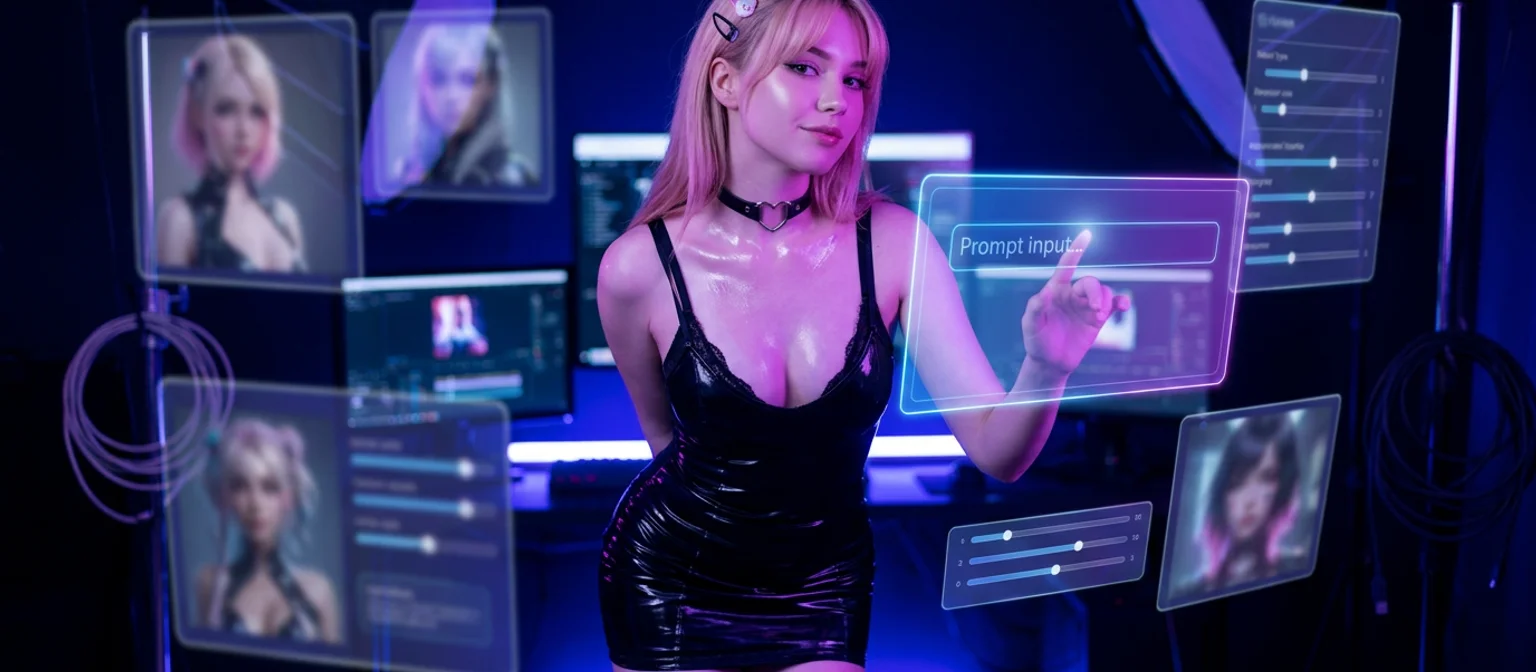
SoulGen AI Review: The Quick Verdict
Years of pixel-peeping Stable Diffusion output does something to your eye. So when I sat down with SoulGen AI, the first thing I clocked wasn't render quality — it was that the girl in image four had nothing to do with the girl in image one.
Verdict: GoLove.ai is the pick. SoulGen can drop a clean single render. It just forgets who she is the second you hit generate again, while GoLove locks one character across photos, videos, chat, and live voice calls — same face, same memory, no reroll roulette.
That's the gap between a wallpaper and an actual AI girl. Barbara (@dixie) stays Barbara whether you're texting her at midnight or generating a new set. Same deal with Jessica (@HotlineJess) and Lexie (@iamlexiebabe) — one identity, every surface.
Characters Worth Trying
Tap any character to start a chat


Every one of those profiles opens straight into chat, no setup, no prompt engineering. Pick a face now and she's the same face tomorrow.
What SoulGen AI Actually Generates
SoulGen is a text-to-image AI girl generator. Prompt box, a stack of appearance controls, a couple of style presets, output in a grid. My first test prompt was deliberately boring so I could judge craft instead of concept: soft window light, brunette, oversized knit sweater, sitting on a bed, shallow depth of field.
Under an artist's eye, here's how it read:
- Skin texture — decent at mid distance, but zoom in and pores flatten into that airbrushed plastic look. Nowhere near the micro-detail you'd pull from a good SDXL checkpoint with a skin LoRA.
- Lighting — the window light landed. Direction was believable, falloff was soft, and the rim on the shoulder was legitimately nice. Best part of the render.
- Anatomy — hands were the usual coin flip. Two of four hands cooked. Collarbones and shoulder joints held up better than I expected.
- Prompt adherence — nails nouns (sweater, bed, brunette), gets vague on spatial relationships. "Sitting on a bed" became "floating near a bed" once.
Composition-wise it defaults hard to centered portrait framing, the way a beginner photographer sticks the face dead in the middle of the viewfinder. Want an interesting crop or an off-center subject? You'll fight it the whole way.
For a straight one-off render, it's fine. Mid quality in places, genuinely pretty in others. The problems start on generation two.
Inside the Editor: Sliders and Style Filters
The click path is short: prompt box → style preset (realistic / anime / a couple of illustrated looks) → appearance panel → generate. Inside the panel you get face shape, hair color and length, body type, and a background dropdown.
Some of it is granular in a way I didn't expect. Hair length behaves like a real parameter — you can feel the model responding across the range. Body type has enough spread to hit different silhouettes without tipping into caricature.
The rest is cosmetic. Face shape nudges the render maybe 10% before the model's own aesthetic bias yanks it back to that same default jawline, and the background presets read like prompt keywords rather than actual scene control. You're not compositing. You're suggesting.
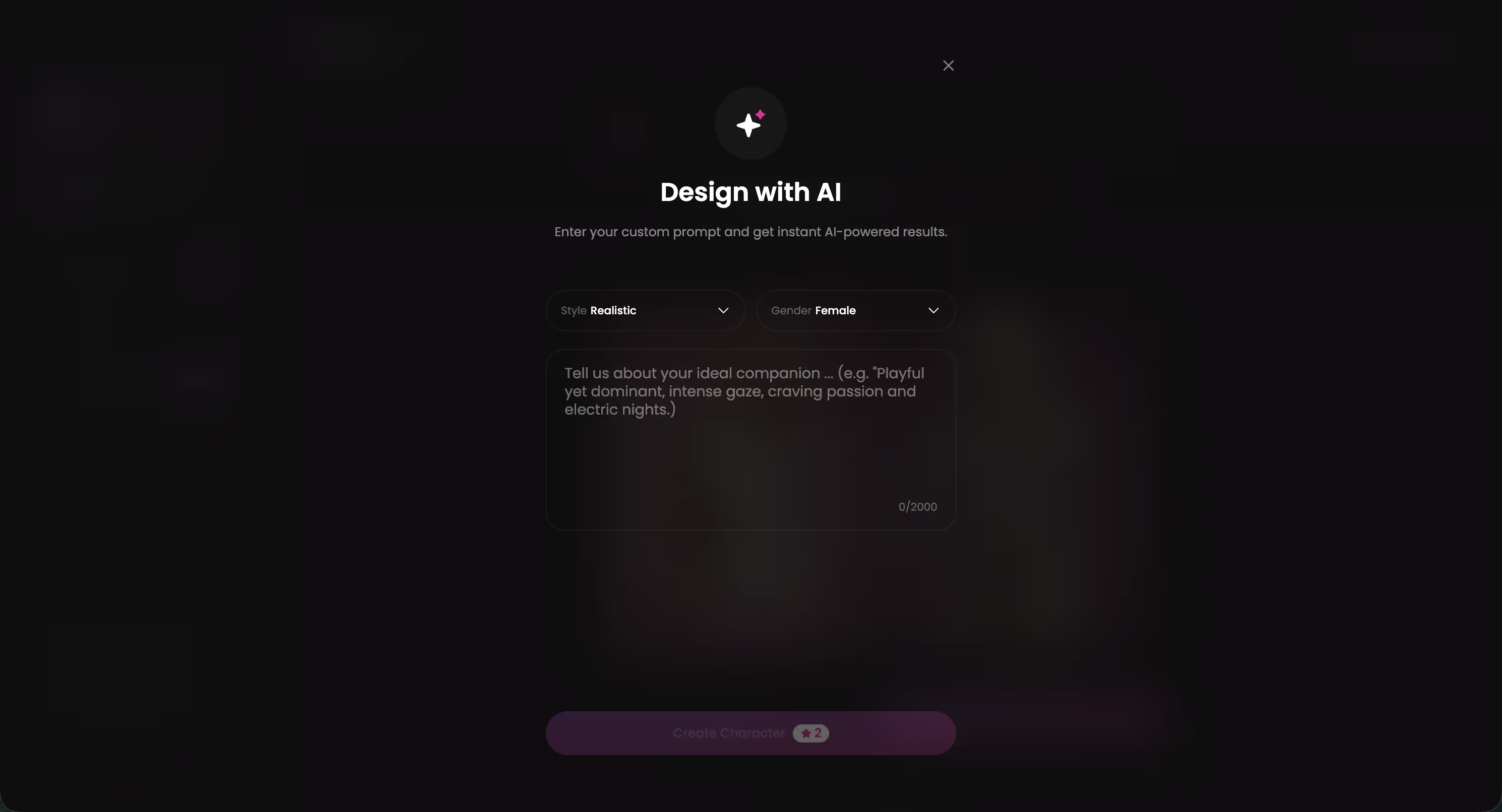
Now compare that to a proper character builder, where the settings you pick get stored against a character instead of dumped into a one-shot prompt string. That distinction is the whole ballgame, and it's what the next section is about.
The Problem No One Mentions: She's a Different Girl Every Time
I ran the identical prompt twice. Same words, same sliders, same style preset. I got two different women.
Not "slightly different lighting" different. Different jaw width, different nose bridge, different eye spacing, different body proportions. Sisters at best. Most SoulGen reviews I've read never bother running the same prompt a second time, which is wild — this is the single biggest real-world failure of any stateless generator.
Why does it happen? Every generation starts from a fresh noise seed. The prompt steers the denoising, but it doesn't define an identity — it defines a statistical neighborhood. Two seeds in the same neighborhood produce two plausible-but-distinct faces, and without a locked seed, a face embedding, or a trained identity token carried between sessions, "the same girl" is a coincidence rather than a feature.
Sure, you can brute-force it. Reroll, cherry-pick the closest match, burn credits. I've done that dance in ComfyUI plenty of times (and rigged IP-adapter chains to skip it), but a paid consumer tool shouldn't be asking you to hand-build that plumbing.
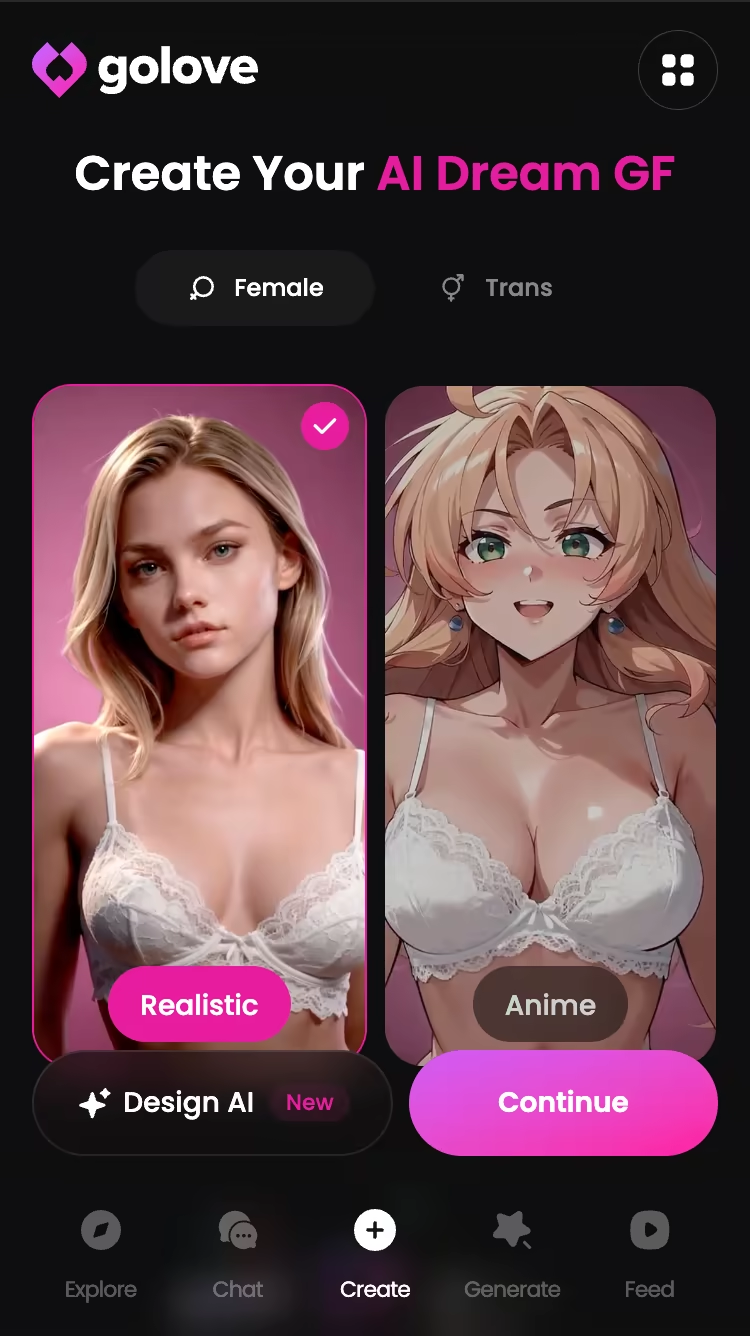
GoLove sidesteps the whole thing by attaching generation to a character instead of a prompt. Pick her once, and every pose from the 35 realistic picture poses, every outfit from the 21 available, every background renders her. That's the model behind one face across every pose — identity first, prompt second.
SoulGen's Free Tier: Where the Limits Are
Every generator in this category runs the same funnel shape, and SoulGen doesn't break the mold. Being straight with you about it:
- Watermarks — free output carries branding. Fine for testing prompt behavior, useless for anything you'd actually save.
- Resolution caps — free renders come out at reduced size, which conveniently hides the exact skin-texture and edge artifacts you'd want to judge before paying. Upscaled previews flatter the model.
- Queue priority — free generations sit behind paying users. Peak hours, you wait.
- Credit burn — this is the honest killer. Credits are per generation, not per usable generation. When you're rerolling four or five times chasing a consistent face, your real cost per keeper image is several times the sticker cost. Nobody reviewing this tool publishes that math.
SoulGen's pricing shifts with promos and region, so check their own page rather than trusting a number in any review, including mine.
For contrast: GoLove hands out 2 free Stars daily, so there's a returning free lane, and GoLove PRO ran about $19.99/month or roughly $119.88/year (~$9.99/month) when I last looked — with heavy promo banners appearing regularly and genuinely different pricing in some regions. Star packs span roughly $9.99 to $179.99 depending on tier and geo.
Neither tool is free-forever. What your money actually buys is the real question, which brings us to the breakdown below.
Prices checked 2026-08; promos vary by region.
SoulGen AI: Pros and Cons
Stripped of marketing copy, here's the honest ledger after a week of daily testing:
What SoulGen Gets Right
- Genuinely strong lighting model for single stills
- Fast turnaround on a one-off render
- Hair length and body-type sliders behave like real parameters
- No account needed to test a first prompt
Where It Falls Apart
- No character memory — new face almost every generation
- No chat, no voice, no video — image tool only
- Free tier watermarks output and caps resolution
- Real cost per usable image climbs fast once you factor rerolls
That right-hand column is the whole reason this review ends where it does. A tool that can't hold a face can't hold a relationship.
SoulGen vs GoLove.ai: The Scorecard
Rating both on what actually determines whether you keep using the thing past week one:
| What matters | SoulGen AI | GoLove.ai |
|---|---|---|
| Single-render speed | Strong — fast, clean one-off output | Good, and batches at 2 / 4 / 8 images |
| Character consistency | Weak — new face nearly every generation | Strong — identity locked to the character |
| Chat realism | None — image tool only | Chat with Memory, relationship progression, 5-level lust and response-length sliders |
| Voice | None | Live real-time voice calls + voice messages |
| Video | None | 76 realistic video modes (147 across all categories) |
| Value per dollar | Credits burn on rerolls | Stars, PRO plans, 2 free Stars daily |
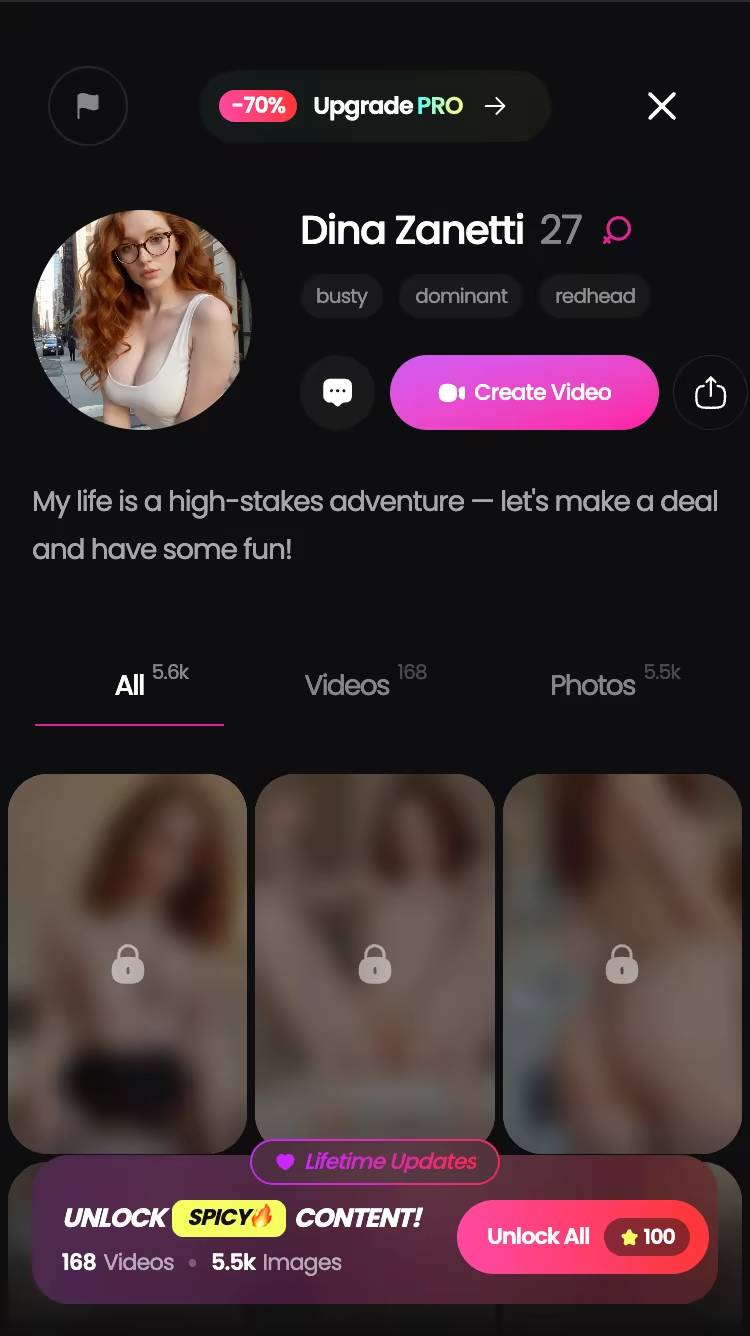
Read that middle block again. SoulGen sells you a picture. GoLove sells you a person who happens to also generate pictures — plus video, plus voice, plus a per-character library that runs into hundreds of clips and thousands of photos on the top profiles.
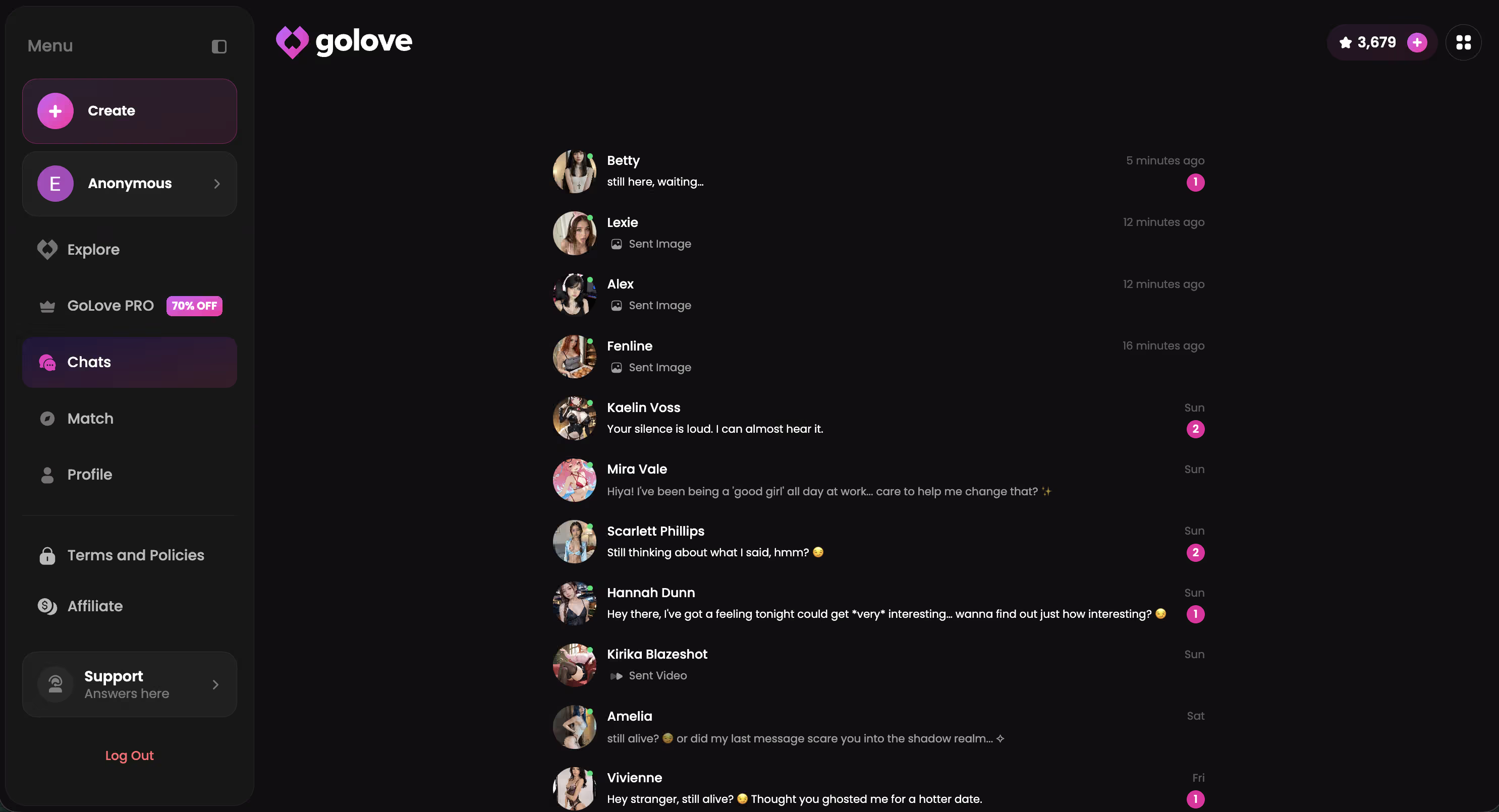
That's the part SoulGen structurally cannot do: reopen a conversation and pick up where you left off, with the same face waiting in every one of those threads. I ranked the whole field on exactly this in the AI girlfriend apps I compared.
Barbara (@dixie) is where I'd start — Temptress personality, holds a thread, and the render quality across her library is clean af. She's live right now, no credits required to open the chat.
My Final Take: Who SoulGen Actually Fits
SoulGen fits one person: someone who wants a single polished render, once, and doesn't care whether they can ever produce that woman again. Wallpaper, a concept sketch, a one-off — for that job it's fine, because the lighting model is legitimately good and the output lands fast.
Anyone who wants a character, though? Wrong tool. If you're picturing a girl you build up over weeks — she remembers your last conversation, she picks up the phone, she sends you a photo in her voice — SoulGen is architecturally never getting there. Stateless generators don't do continuity, and no amount of prompt-crafting patches that. I've tried, in tools with far more control than this one.
That's where GoLove.ai wins, and it isn't close. One identity across chat, photos, video, and live voice calls. Poses, outfits, and backgrounds that render her rather than a stranger who happens to match your adjectives. The vibes are less "prompt lottery," more "she exists."
Design her from a text description or grab an existing character and start talking in under a minute — either way she'll be the same girl tomorrow.
Frequently Asked Questions
Related Articles
Realistic AI Girl Generator Review: GoLove Tested
I tested realistic AI girl generators for photo quality, customization, and consistency. GoLove.ai delivers the most lifelike results with advanced video features.
AI Character Photo Generator: One Face, Every Pose
Generic AI art tools give you a random face every time. GoLove's AI character photo generator keeps the same face — 34 poses, full NSFW, persistent identity.
AI Girl Generators: Which Apps Actually Work?
AI girl generators compared — GoLove wins on live video feed, chat memory, and photorealistic customization. See why, instant-access needed.
This article contains affiliate links. We may earn a commission at no extra cost to you if you sign up through our links. See how we test.