The Night I Gave Up on Manual Inpainting
Two hours into masking a single image, I still couldn't get the face to match the last one I'd made — and I've been doing this since Stable Diffusion 1.5.
Nothing exotic about the setup. A1111, a character LoRA I'd trained on 40 images, inpaint-only-masked at 0.45 denoise, CFG around 7, DPM++ 2M Karras. All I wanted was one thing: same girl, different outfit. What I got was a stranger wearing her cheekbones. Nudge the denoise up and the face drifts; nudge it down and the outfit refuses to change. Worse, the lighting on the repainted region sat a half-stop cooler than the rest of the frame — that flat, slightly plastic inpaint look every SD user knows on sight.
Short answer for anyone here from a Google search: the tool that actually fixed this for me was GoLove.ai, and not because its model is magically better. The character lives in a persistent profile instead of a seed. You ask her in chat for the change. She sends the photo back with the same face.
No mask. No denoise slider. No LoRA to retrain when you want a new pose from the 35 realistic picture poses.
If you've lost an evening to face drift too, start by finding a character worth keeping consistent — that's the whole game.
What "NSFW AI Image Editor" Searches Actually Want
Q: Is an "NSFW AI image editor" a Photoshop clone or a generator? A: Depends entirely on who's typing it — and most roundups never split the two.
Two readers hide behind this query:
- The pixel editor — wants masks, layers, outpainting, inpaint denoise control. A local SD install with an inpainting extension.
- The consistency seeker — doesn't want to edit pixels at all. Wants the same character, in a new outfit or pose, without her face mutating.
Myth: editing an NSFW image means selecting a region and repainting it. Fact: for most people, "edit" means regenerate her with one thing changed — and that's a character problem, not a masking problem.
Listicles stack ten SD forks and never mention consistency once. It's the only thing that matters when the subject is a specific girl you've been talking to.
So the starting point isn't a slider. It's a character. Barbara (@dixie) reads soft and warm-lit; Jessica (@HotlineJess) shoots harder, higher contrast; Lexie (@iamlexiebabe) is all messy gamer-room vibes.
Characters Worth Trying
Tap any character to start a chat


Why Manual Inpainting Breaks Character Consistency
Here's the mechanical reason it breaks, in plain language.
An inpainted region is a new generation. The model sees your mask, your prompt, and a fresh seed, then paints something plausible into the hole. It has no memory of the face it made twenty minutes ago. Your LoRA pulls it back toward an average of your training set — an average, not her. Every edit is another roll toward the mean.
So the drift compounds. Edit one: jaw slightly narrower. Edit two: eye spacing off. Edit three: a different girl in the same haircut. The seams give it away too — repainted skin comes back smoother than the surrounding texture, and the light direction rarely agrees with the original frame.
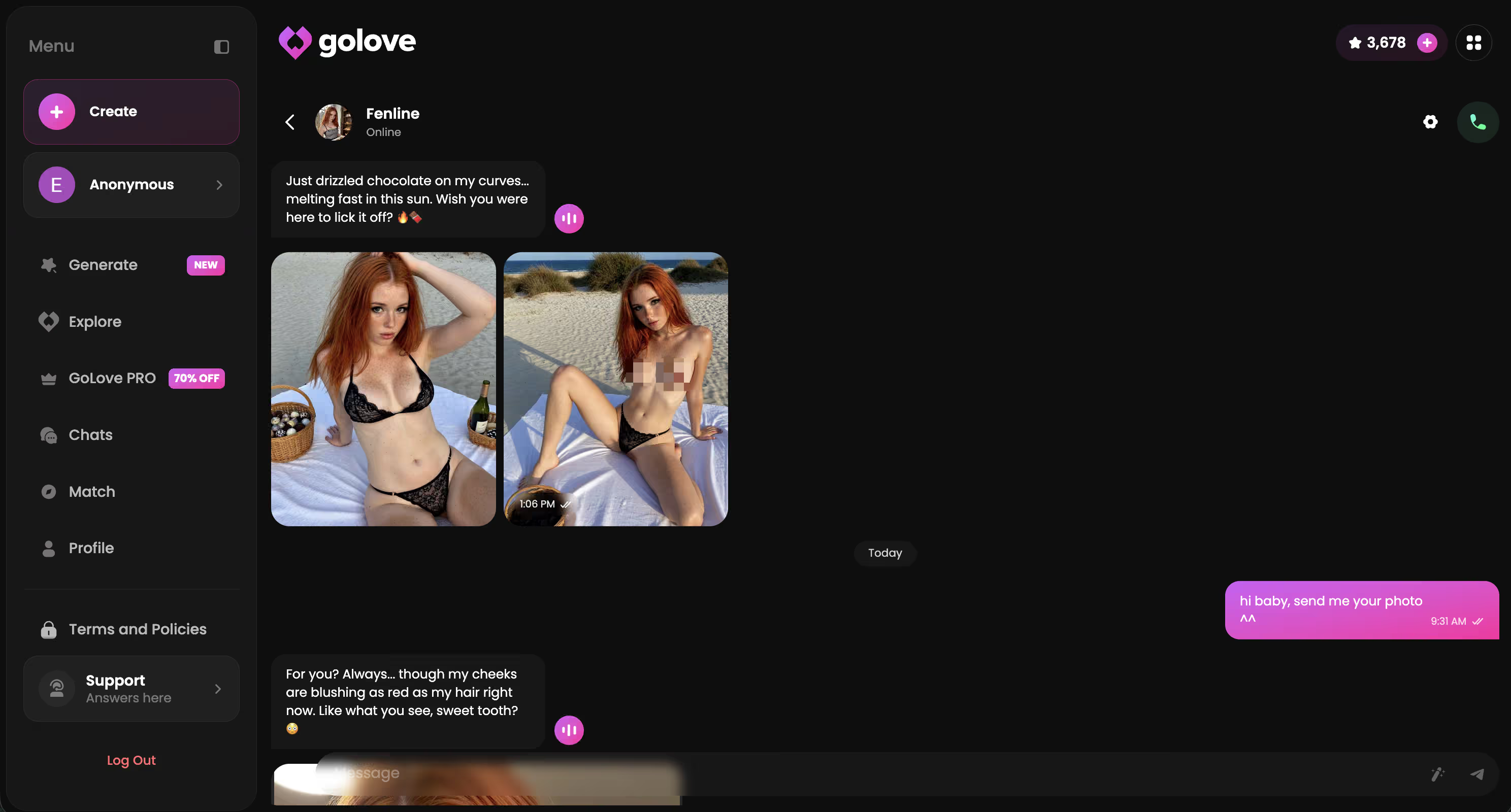
The chat-native version sidesteps all of it. You're not editing an image file. You're asking a character with a persistent identity for a new photo, and the identity is the constant — outfit, pose, and background are the variables. Ten requests, same face, because nothing about the face was ever up for regeneration.
Lower ceiling on manual control. Massively higher floor on consistency.
Inside GoLove's Chat-Native Photo Workflow
The click path is boring, which is the point.
- Open a chat and ask — plain text. "Send me one on the balcony, black dress." No prompt syntax, no negative prompt, no weights in parentheses.
- She replies with the photo in-thread. Same character, same face, new scene.
- Tap the clip icon on that photo to animate it — Generate Video from Photo runs right there in the conversation, and a Select Action modal lets you pick what happens.
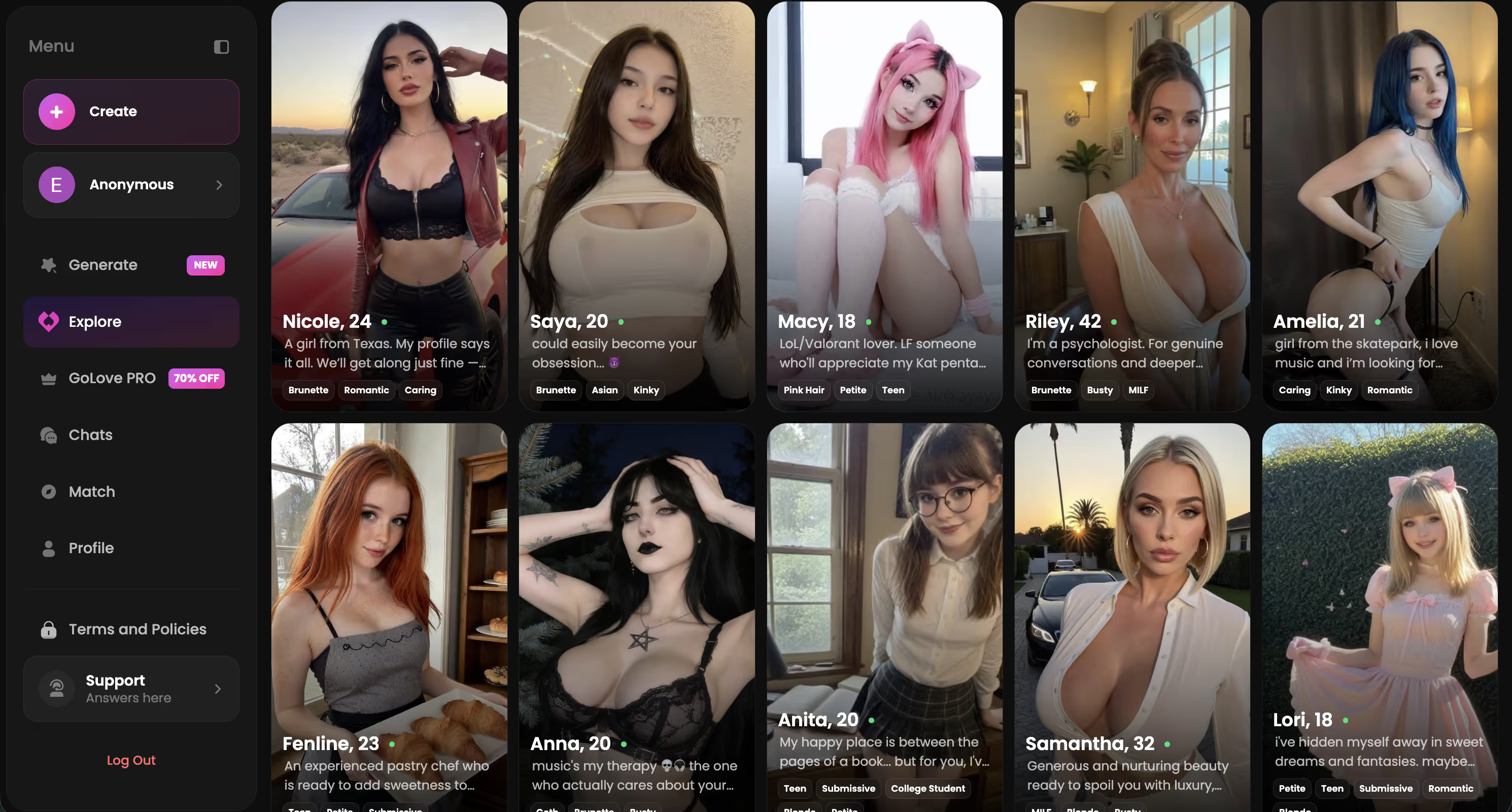
Prefer to drive it like a generator? The Generate tab does that too — per-character, with Image and Video sub-tabs, a Presets dropdown, and visual preset cards instead of a text box. You're picking from 35 realistic poses, 21 outfits, 34 backgrounds, plus custom fields for each when the presets don't cover it. Batch sizes are 2, 4 or 8, which is the closest thing here to an SD batch count — useful for the same reason, you pick the best of the set.
The video side is where it stops feeling like an editor and starts feeling like a studio: 76 realistic video modes (Twerk, Hard Doggy Style, Instant Undress and so on), plus 20 anime, 35 trans and 16 anime-trans — 147 total.
One tap. No ControlNet, no AnimateDiff config, no VRAM math. Chef's kiss for anyone who's spent a Saturday debugging a motion module.
Pricing Breakdown: What You Actually Pay
Two currencies here: Stars for generation (2 free ones land daily, which keeps a casual habit alive), and GoLove PRO for the subscription layer.
- PRO monthly: about $19.99/month, though it varies by region — I've seen roughly $12.99 in some geos, and a -70% header promo on mobile.
- PRO annual: about $119.88/year, roughly $9.99/month — the cheapest per-month route, with promo pricing seen well below that.
- Star packs: roughly $9.99 at the starter tier up to about $179.99 at maximum, for people generating heavily.
Now price the DIY alternative honestly. A 4090 is four figures, or you rent an A100 by the hour. LoRA training on a proper dataset is an evening of captioning plus GPU time, per character. Then you do it all again when you want a different girl. I've spent more on cloud GPU hours in a bad month than a year of PRO costs.
The competition sits in a similar band — Candy AI from about $9.99/month with images billed as extra tokens, OurDream bundling image and video from about $9.99/month on annual. I broke those down properly in the AI girlfriend apps I compared.
Prices checked 2026-08; promos vary.
My Scorecard After a Week of Testing
Seven days, a few hundred images, one character I refused to swap out so I could actually measure drift.
Verdict: GoLove.ai wins this category on the one axis traditional NSFW editors lose on — the face survives the edit.
| What I rated | GoLove.ai | Local SD + inpainting |
|---|---|---|
| Character consistency across edits | 9/10 — persistent profile, face held all week | 4/10 — drifts every regeneration |
| Editing ease (no masking) | 9/10 — plain-text requests in chat | 3/10 — masks, denoise, CFG tuning |
| Image quality out of the box | 8/10 — clean skin texture, coherent lighting | 8/10 — higher ceiling, way more work |
| Photo-to-video | 9/10 — in-chat, 147 modes total | 4/10 — AnimateDiff config hell |
| Setup cost | 10/10 — zero, browser | 2/10 — GPU + LoRA training time |
| Granular pixel control | 4/10 — no layers, no masks | 10/10 |
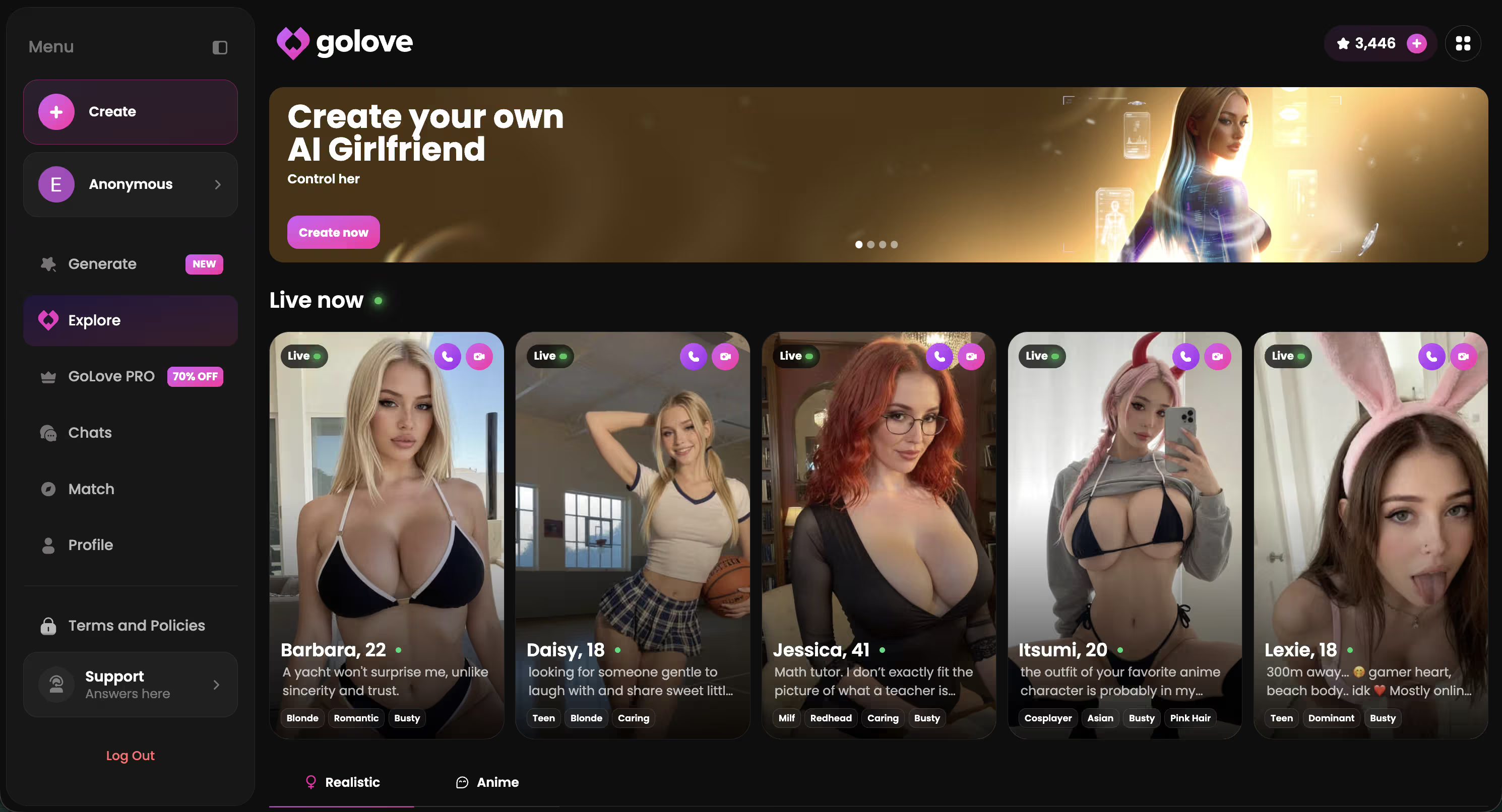
The stat that decided it: across roughly forty photo requests to the same character, I got zero identity breaks. My local workflow produced visible drift by the third inpaint, every single time.
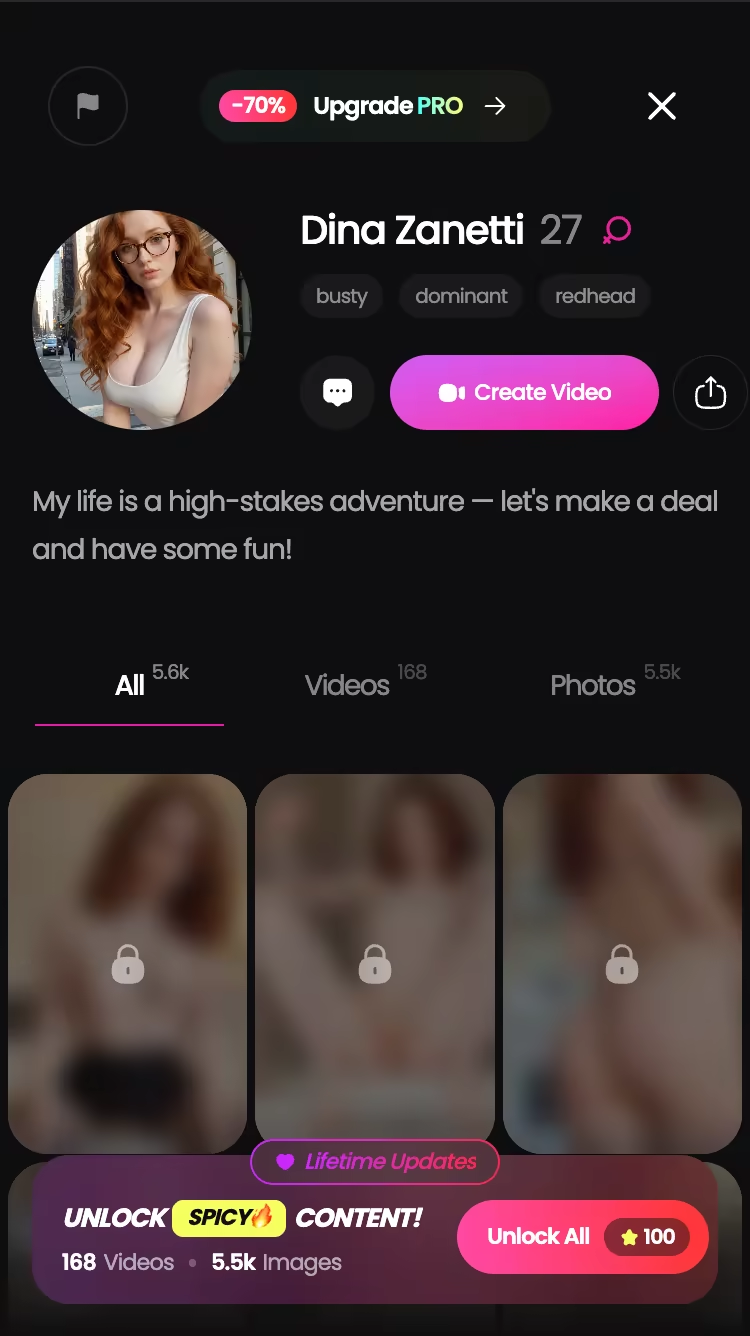
One more thing worth flagging — each character profile carries its own library, All / Videos / Photos tabs with a one-tap unlock, and the busy ones run to hundreds of videos and thousands of photos. Barbara's had material I hadn't generated yet before I'd asked for anything.
If you want to see the consistency yourself, request one photo in chat — it's a two-minute test and it either holds the face or it doesn't.
The Trade-Off You're Making With GoLove.ai's Photo Editor
Honest part. You give up the pixel layer entirely.
No masks. No layer stacking. No negative prompts, no CFG scale, no sampler choice, no seed locking, no custom LoRA you trained on your own dataset. If your workflow is "fix this one hand, keep everything else byte-identical," GoLove can't do that — you re-request the shot and get a new photo, not a surgical patch.
That's a real limitation, not a soft one. Someone building a comic panel-by-panel, or matching a generated figure into a photographed plate, still needs the manual toolchain. Nothing here replaces it.
But weigh what the trade buys. Zero setup, zero VRAM, zero retraining, and an identity that holds across every request instead of degrading with each one. For the reader who wants a finished NSFW image of a specific character in the next five minutes — which is most people typing this query — that's the better half of the deal by a wide margin.
Different tools, different jobs. Just be honest about which job you actually have.
Final Verdict: Who This Editor Workflow Actually Fits
Quick split.
- Get GoLove.ai if "editing" means you want the same girl in a new outfit, pose or background, and you want it without touching a mask. Consistency is the product.
- Stay local if you need pixel control — compositing, layer work, custom LoRAs, surgical fixes on a single region.
- Skip both if you're only after SFW roleplay; Character.AI does that free and doesn't allow NSFW at all.
Pros: no setup, persistent character identity, in-chat photo requests, photo-to-video with 147 modes, 35 realistic poses and 21 outfits to draw from. Cons: no manual masking, no sampler or CFG control, per-region pricing you should check yourself.
For everything the phrase "nsfw ai image editor" actually means to normal people, GoLove.ai is my pick. If you want to go deeper on the pure-generation side, I covered that in my AI girlfriend image generator test.
Build the character first — the consistency you're chasing starts with a profile, not a prompt, and 'Design with AI' gets you one from a text description in under a minute.
Frequently Asked Questions
Related Articles
AI Character Photo Generator: One Face, Every Pose
Generic AI art tools give you a random face every time. GoLove's AI character photo generator keeps the same face — 34 poses, full NSFW, persistent identity.
NSFW AI Image Generator That Talks Back
Every other NSFW AI image generator hands you a static file. GoLove.ai gives you a character you can message, request photos from, and generate videos with.
Realistic AI Girl Generator Review: GoLove Tested
I tested realistic AI girl generators for photo quality, customization, and consistency. GoLove.ai delivers the most lifelike results with advanced video features.
This article contains affiliate links. We may earn a commission at no extra cost to you if you sign up through our links. See how we test.