NSFW AI Gen Is a Stack, Not a Single Tool
Every NSFW AI gen tool I've tried does one thing okay — then completely falls apart the second you push it.
That's not a coincidence. "NSFW AI gen" isn't really a product category, it's a stack. Static images at the floor, character-consistent photo platforms in the middle, in-chat companion generation at the top. Most tools live in one layer. Occasionally two, if they're feeling ambitious.
Short version: GoLove.ai is where I'd start — it's the only platform that covers every tier of NSFW AI gen under a single login, and it doesn't make you hand over your email before showing you anything explicit.
This piece uses a tiered framework instead of a comparison list, because comparison lists treat Tier 1 as the finish line. It isn't.
| Tier | What It Delivers | Where It Breaks |
|---|---|---|
| Tier 1 — Static generators | Fast one-shot images | No face lineage, no memory |
| Tier 2 — Photo platforms | Consistent face across a gallery | Separate queue, zero chat context |
| Tier 3 — In-chat companion | Photo delivered inside the thread | Almost no platforms reach here |
| Tier 4 — Photo to video | Animated clips from generated stills | One platform does this natively |
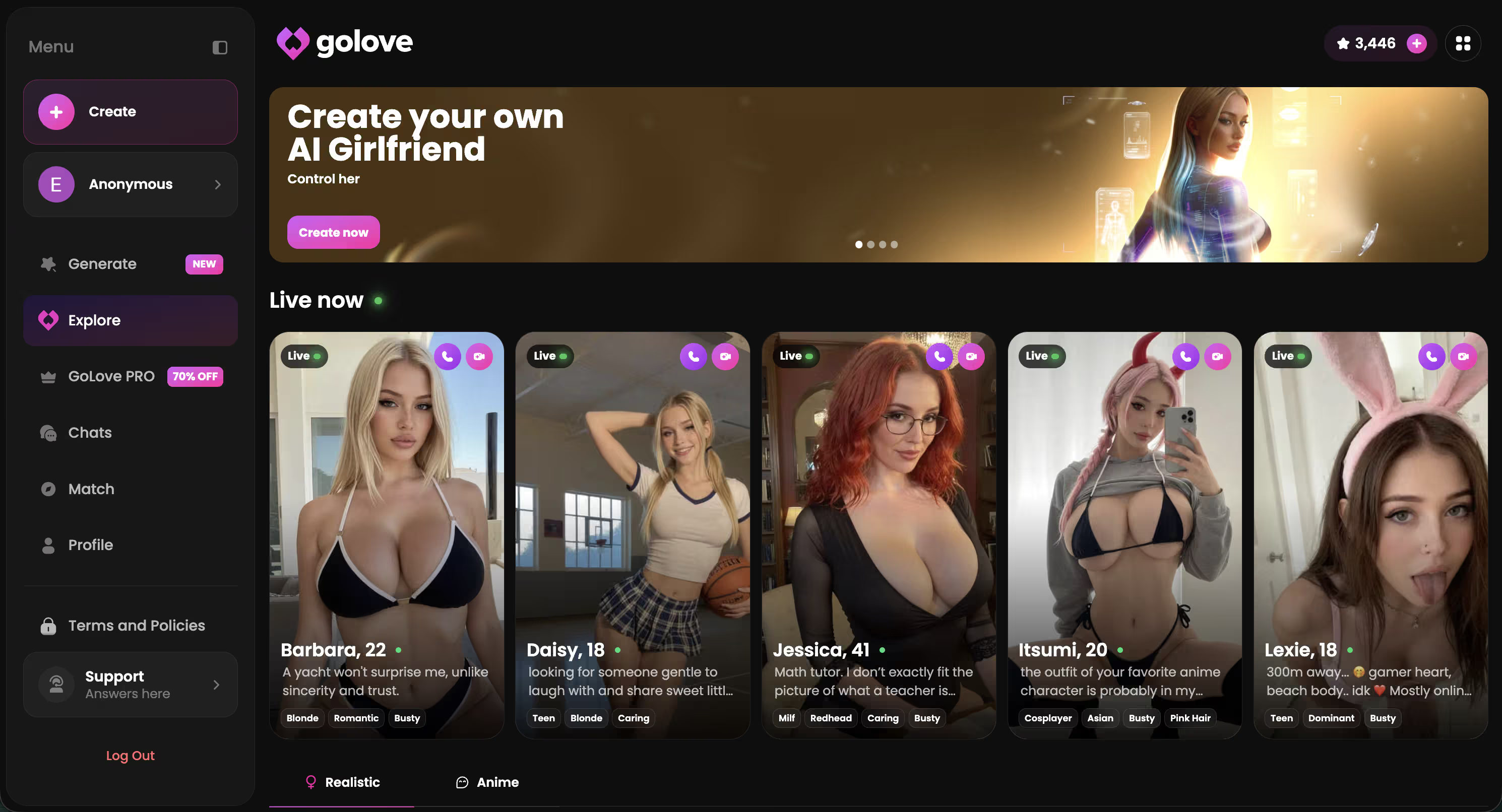
Three characters waiting on GoLove's explore page right now: Jessica (@HotlineJess) — the dominant math tutor with actual edge — Kennedy (@kennyhill) running on pure confidence, and Lexie (@iamlexiebabe) with a controller in one hand and your attention in the other. Not stock avatars. Persistent characters with memory.
Characters Worth Trying
Tap any character to start a chat


GoLove clears all four tiers. Worth clicking in before you burn another hour on something that taps out at Tier 1.
The Three Tiers: Where Most Tools Tap Out
Every NSFW AI gen roundup treats Tier 1 like it's the destination. It's barely the on-ramp.
Here's the framework I run before committing to any platform:
- Static output (Tier 1): An SD fork or basic web UI. Fast, often watermarked, mid quality by default. Every image is basically an orphan — it's like running img2img with no init image. Output exists, but it has no lineage, no consistent face, no memory. Disposable by design.
- Character-consistent gallery (Tier 2): Same face carried across a generation batch. Better aesthetic coherence — closer to building a reference sheet than random sampling. But you're still navigating a separate queue that lives completely outside any conversation you've had. The character exists in isolation from anything you said.
- In-chat companion-native (Tier 3): Type a photo request inside the active thread. The companion generates an image of herself — consistent with her established look — and drops it right there in the conversation. No new tab. No queue. Zero context switch. This one honestly feels different.
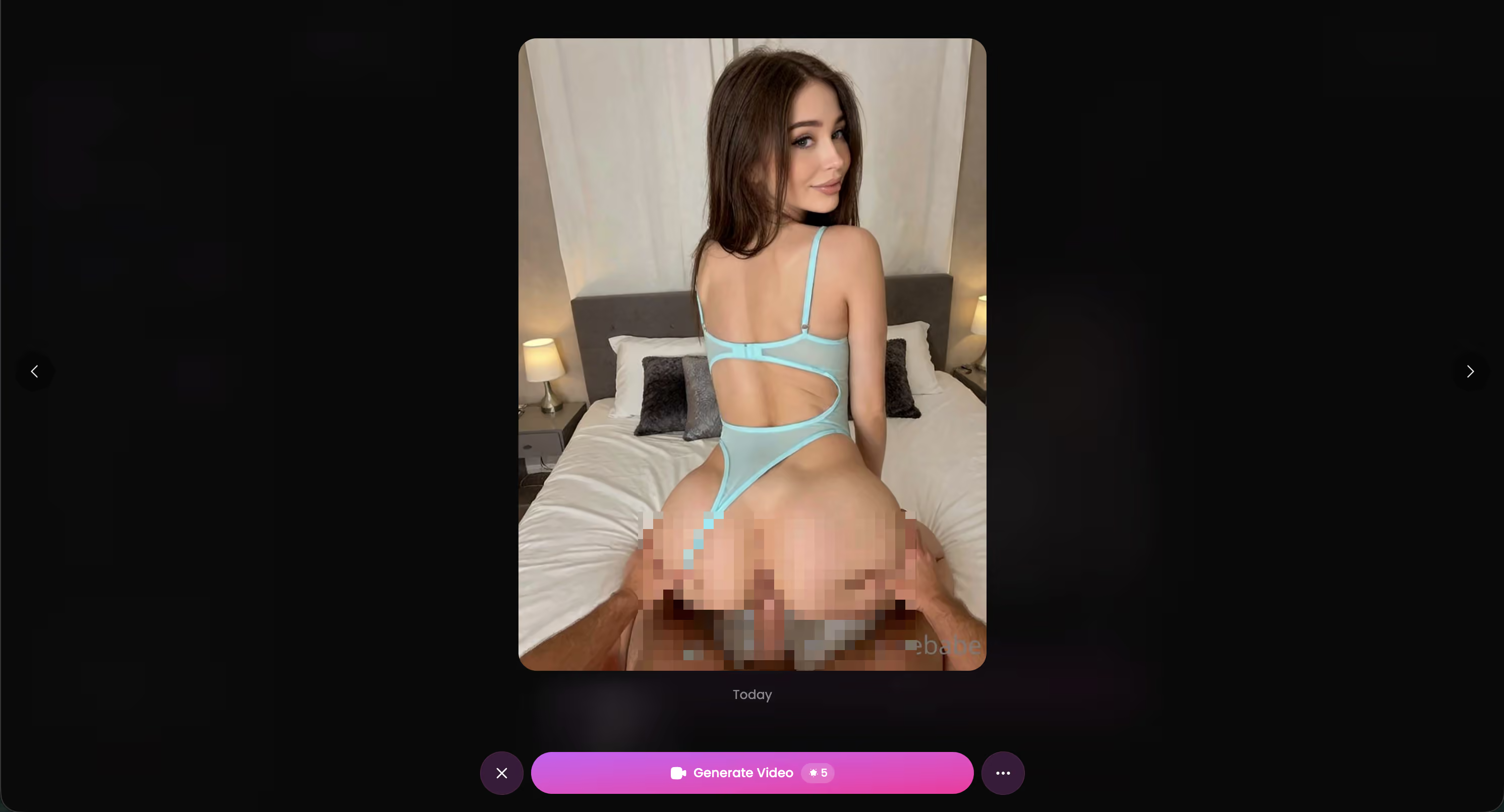
Tier 1 tools can produce clean af output on a well-structured prompt — I'm not saying they're bad. With the right negative prompts and a tuned sampler you can pull some genuinely fire images. But every session resets from zero. You're not building anything. Each generation is a dead end with no lineage back to the last one.
GoLove.ai operates natively at Tier 3. And there's a Tier 4 that basically nobody's covering yet.
My 48-Prompt Experiment With Standalone Generators
One week. 48 prompts across three popular standalone NSFW generators. Same character description, same core prompt template, different platforms — like a controlled test but for image vibes.
Results, and they're kinda bleak:
- 12 of 48 outputs came back watermarked — unusable without paying through a second gate
- 0 of 48 shared a recognizable face with any prior result from the same session
- Every platform required navigating away from any active conversation to a separate generation UI
- None retained prompt memory or character preferences between generations
- One platform added an explicit-content queue delay averaging 4 minutes per image (I clocked this at like 11pm on a Tuesday, just sitting there watching a progress bar with nothing else to look at)
And honestly the frustration isn't really about output quality. It's the architecture. You're not building anything — each generation is a dead end. It's like inpainting without a mask: technically produces an image, but nothing's anchored to anything. The prompt just evaporates when you close the tab.
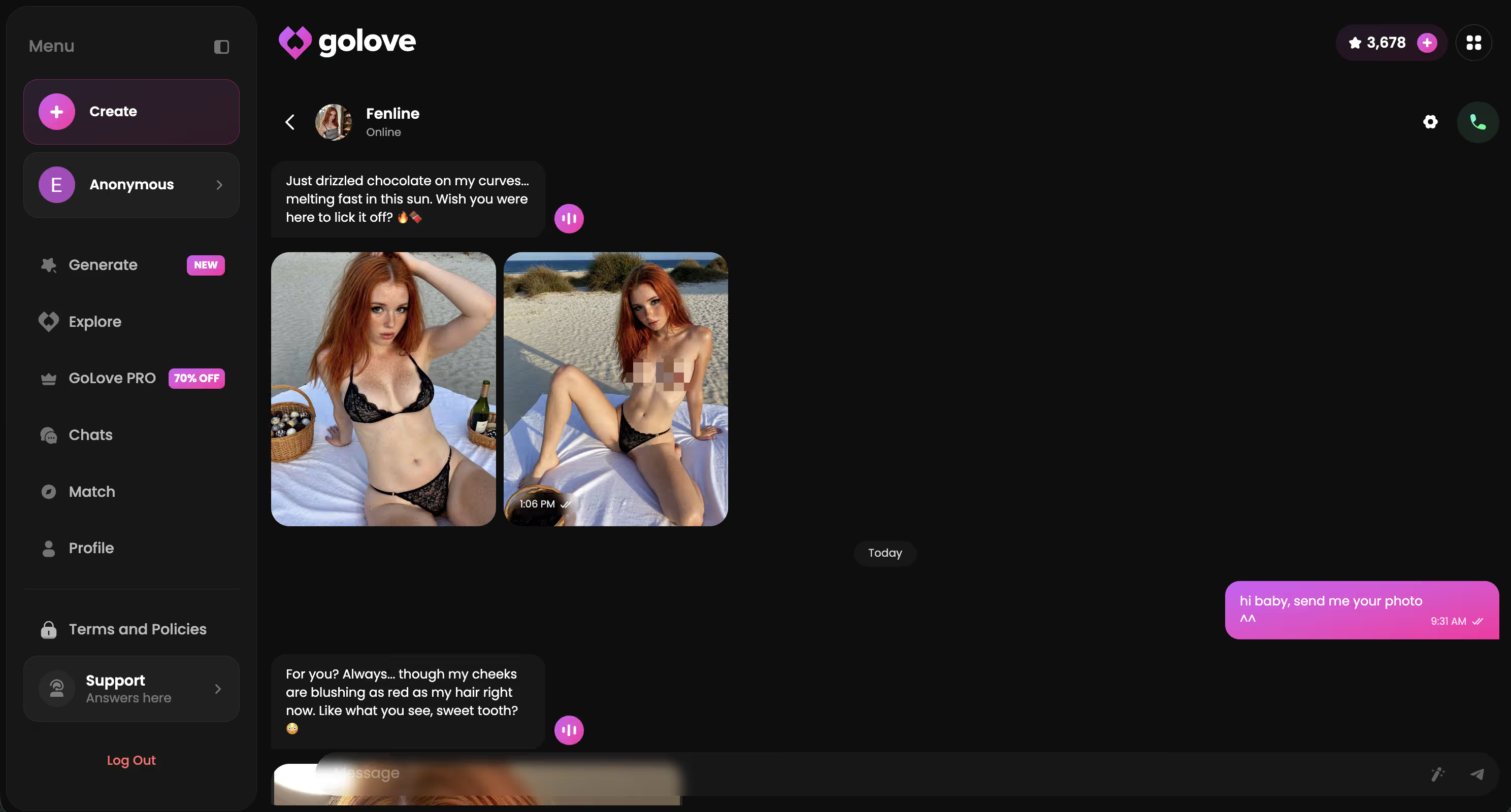
When a photo request lives inside the conversation thread, it inherits the character's memory, look, and history. The image has context. It isn't an orphan.
That shift — from generation queue to chat-native request — is what Tier 3 actually means in practice.
The In-Chat Request Difference (And How to Actually Use It)
The architectural gap is real. Three steps, and each one matters:
Step 1: Build or Pick the Character
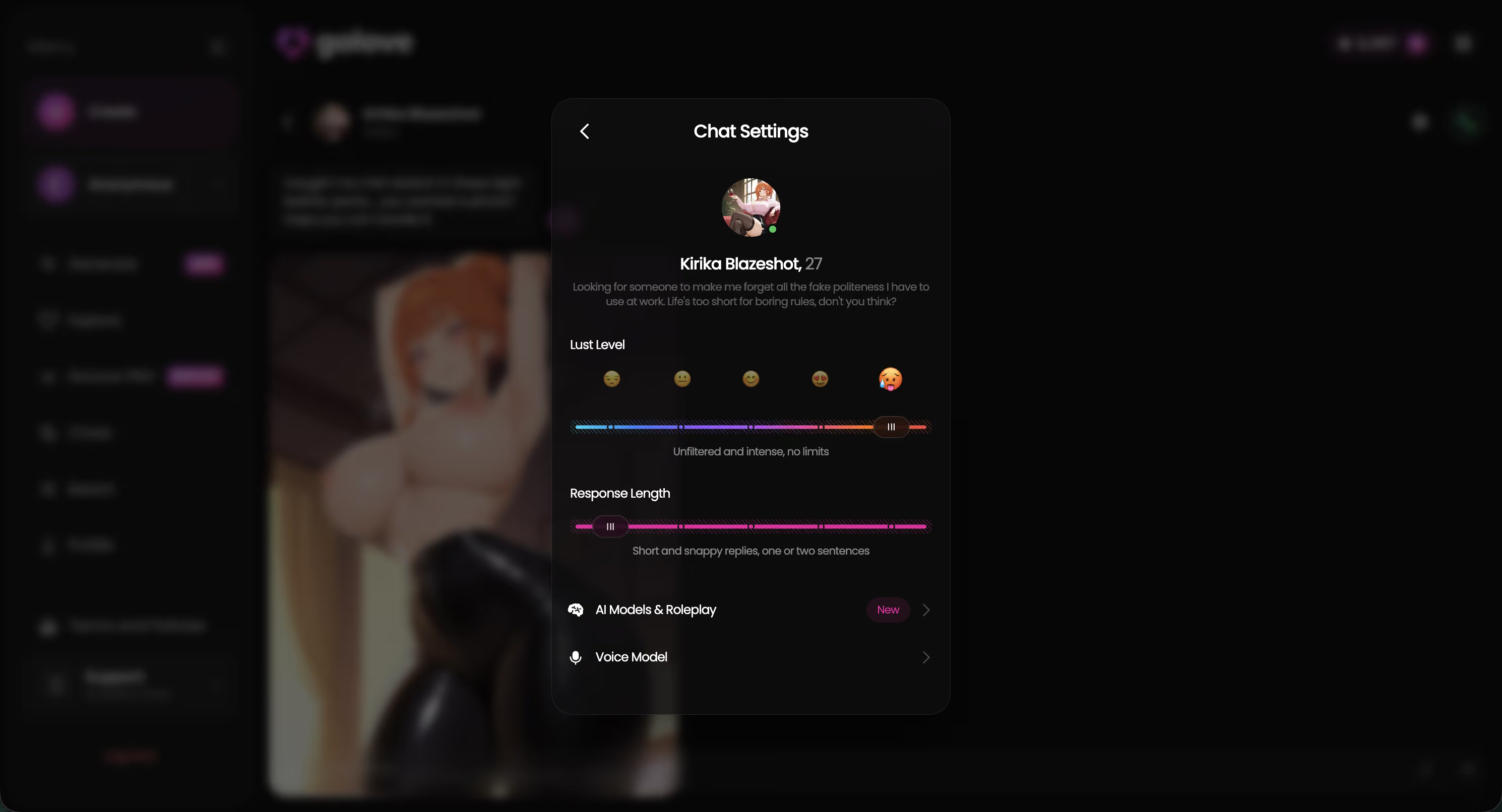
GoLove.ai drops you directly into the character browse or creation flow — no email gate before explicit content. Design the look once: face, body type, lust level (5 settings that go from wholesome to fully unfiltered). It persists — kind of like saving a checkpoint in SD that carries your whole aesthetic forward automatically. Every photo you request later inherits that foundation.
Step 2: Ask for a Photo Mid-Conversation
Type a photo request inside the active chat thread. The companion generates an image of herself — consistent with her established look — and delivers it right there in the conversation. No new tab, no generation queue, no context switch. This is what Tier 3 actually feels like vs. just reading about it on a comparison list.
Step 3: Save It, Then Escalate
The image auto-saves to your personal gallery. From the same interface, you can escalate any still to a video clip — and the companion's memory of the conversation that prompted it stays intact. (That last part matters more than it sounds at first, especially once you've used a platform that loses everything the moment you leave.)
The privacy angle is worth flagging too. AnonAuth means you never hand over credentials before seeing explicit content. In this niche especially — more than almost anywhere else online — that's a genuine privacy win, not a minor UX footnote.
- Character setup persists across sessions — same face, same aesthetic, same lore
- In-chat delivery means zero context-switching to a separate generation queue
- Gallery auto-save means the archive compounds every session
Character photo consistency matters more the longer you use a platform. When the same face shows up session after session, you're building something instead of generating orphans. Set that foundation now.
Photo-to-Video: The Tier Nobody's Talking About
Coming from the Midjourney and SD community, a high-quality still was the ceiling. You'd nurse a prompt through 20 variations, hit something with the right vibes — good lighting, believable skin texture, composition that actually holds up at 100% zoom — save it, and that was it. The still was the output.
Here, the still is just the starting frame.
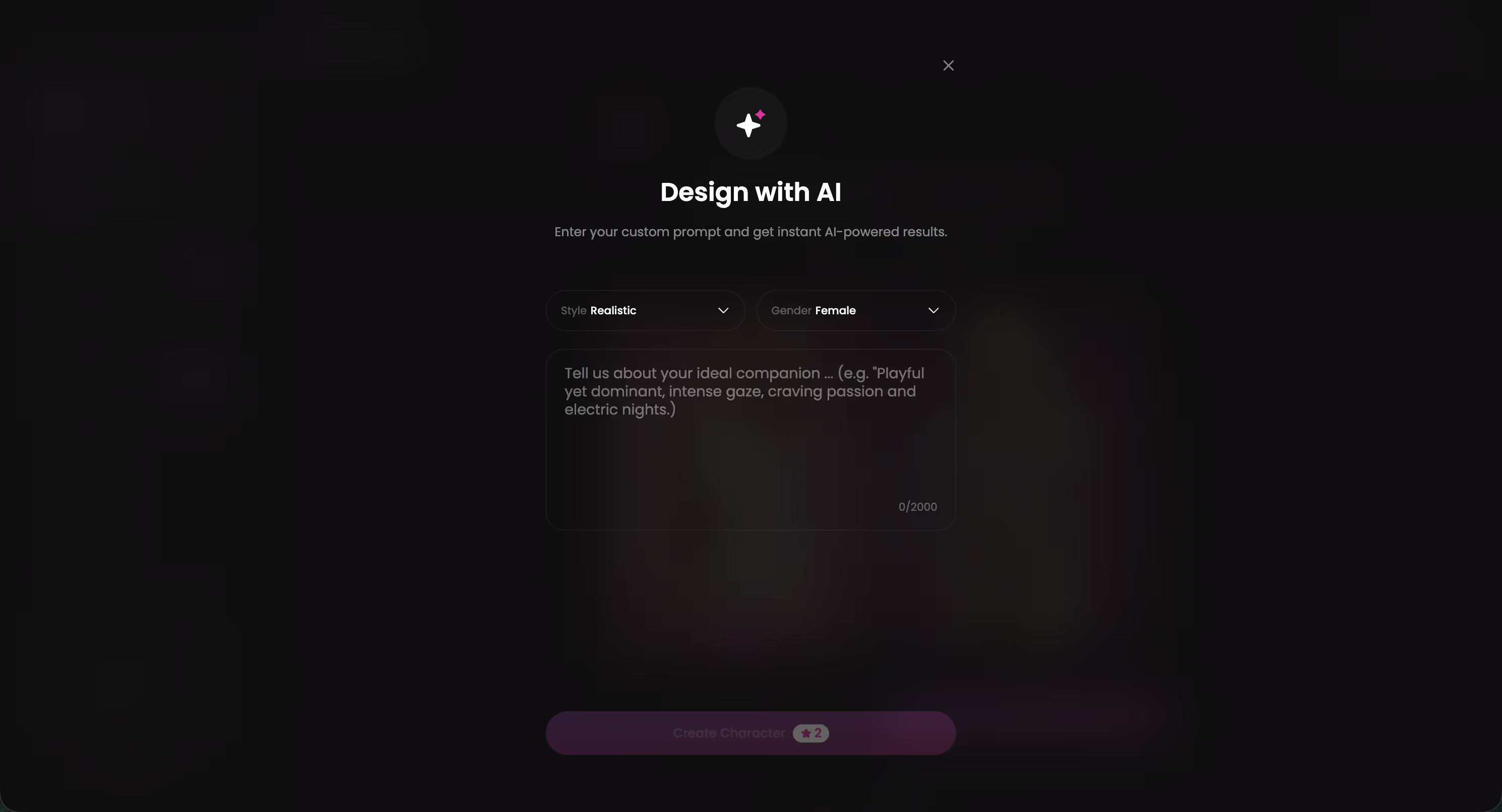
GoLove.ai's Generate Video from Photo feature — new in 2026 — animates any generated still into a short clip without leaving the platform. And architecturally? That's kind of a significant deal. Video requires temporal consistency and motion coherence across frames. Standalone image generators have zero pipeline for this. They produce a frame. GoLove produces the sequence.
This is honestly the single biggest gap in NSFW AI gen coverage right now. Every roundup on the SERP treats generation as image-only — leaving readers with a fundamentally incomplete picture of what the actual ceiling looks like. None of them address video. At all.
The retention mechanic compounds it: 2 free Stars drop daily just for returning. More returns means more generations, a richer gallery, a growing personal archive — not a throwaway generator but a compounding creative stack.
Every photo and video saves permanently. The archive grows session to session. For a deeper look at where video generation sits across the full field, the full NSFW AI video generators ranking for 2026 has the breakdown.
The NSFW AI Gen Checklist: What Good Actually Looks Like
Eight criteria. Pretty much non-negotiable for me at this point.
- Output realism — does it look like a photograph or an AI smear? Skin texture, lighting coherence, edge sharpness at 100% zoom. Not "is it pretty" — "does it hold up on close inspection?" There's a real difference between those two questions.
- Prompt responsiveness — does it honor specific physical descriptors the way a tuned sampler does, or does it average everything into the same generic face regardless of what you typed?
- Content policy flexibility — does it censor mid-generation or actually commit to the prompt without a bait-and-switch mid-render?
- Character continuity — same face, body, and aesthetic across sessions, not just within a single batch?
- Session memory — does the platform remember conversation history and preferences that build the long-term experience?
- No-email access — can you browse explicit content before handing over credentials?
- Voice continuity — is there audio matched to the visual, or is it a silent slideshow with no real presence?
- Gallery persistence — is your generated archive growing, or does every session start from zero?
Most standalone generators clear maybe 2 or 3 on a good day. GoLove.ai clears all 8.
And it's not aspirational — this is the baseline. If a platform can't clear it, you're stuck at Tier 1 regardless of how good their landing page looks.
Verdict: GoLove.ai Clears Every Tier
One-line verdict: GoLove.ai is the honest pick for NSFW AI gen because it collapses the entire stack — Tiers 1 through 4 — into a single login.
Unpacked fast: you're not navigating a generation queue. You ask your companion, she sends the image inside the thread. AnonAuth means zero email friction. Memory means her look and preferences persist. Gallery means the archive compounds every session. Video means the ceiling is a clip, not a still. Voice means it isn't silent.
Who it's for: anyone past the "what even is this?" stage who wants a generation experience that builds rather than resets.
Honest narrow carve-out — and I'll be real about this — if you want bulk static output with fine-grained CFG and negative-prompt control and genuinely don't care about continuity, an SD fork gives you more raw technical control. That's a legitimate use case. But it's not what most people searching "nsfw ai gen" are actually hunting for.
Four tiers. One login. No friction. GoLove.ai is the generation stack that actually holds. Go see it.
Frequently Asked Questions
Related Articles
Undress AI Alternative: Try This Instead
Tired of Undress AI's upload limits? GoLove.ai is the top undress AI alternative — uncensored NSFW image generation, no caps, real quality. Try.
NSFW AI Generator No Limit: GoLove Uncensored
Mainstream AI generators block NSFW. GoLove.ai removes every filter — explicit image generation with no content limits. See what's possible now.
Uncensored AI Generator: Find One That Works
What 'uncensored AI generator' means, explained by a digital artist — and why GoLove.ai delivers the consistent, high-quality results you're looking for.
AI Girlfriend Photo App: Tested by a Digital Artist
Looking for an AI girlfriend photo app with real creative control? GoLove.ai delivers in-chat photos, custom characters, and stunning image quality.
This article contains affiliate links. We may earn a commission at no extra cost to you if you sign up through our links. See how we test.